 |
Events
- On 25 February, the Three-Minute
Thesis Competition will take place. In
this competition, doctoral researchers from all
disciplines present their dissertation topics in
English – in no more than three minutes time! This
renowned competition is conducted at numerous
universities around the world. It starts at 19.00h in
the Rosens?le (Fürstengraben 27). (Photo: Graduate
Academy)
- Love Data Week is a worldwide event series
that takes place from 9 to 13 February. This year's
motto is "Where’s the Data?". During this week,
numerous online events will provide information on a
wide range of research data management topics. As part
of this year's Love Data Week, the Thuringian
Competence Network for Research Data Management
(TKFDM) will be organising three
events as well as a coffee lecture.
- How can cultural assets be preserved digitally?
That's the main idea behind the HACK
THE HERITAGE hackathon on 20 and 21
February in Jena. Researchers, students and artists
will be tackling real challenges from museums,
archives, and libraries and come up with prototype
solutions – like how to use, structure, visualise, or
share digital cultural data.
|
|
|
 |
Get
involved
- Female postdocs, habilitation candidates, junior
research group leaders or junior professors can now
apply for the mentoring
programme for female postdocs at the
universities of Halle, Jena and Leipzig. You can
expect individual mentoring by experienced professors
from the three universities as well as top-class
training offers on career-relevant key qualifications.
The programme starts in June 2026 and the application
deadline is 28 February 2026.
- On 20 November 2026, the next Long
Night of Science will take place in Jena.
Researchers from the university can participate with
their own topics and programme ideas. Sought are
insights into current research, offering interactive
formats, experiments or new perspectives on research.
Proposals can be submitted until 21 February using this
form. (Picture above: Nicole Nerger/Uni Jena)
|
|
|
 |
Announcements
- The ProChance
– Exchange programme offers female
postdocs financial support for short research stays,
publication costs and participation in workshops and
summer schools. You can apply for up to �1,000. The
University of Jena's IMPULSE
– conferences programme supports
participation in academic conferences. Postdocs can
apply for up to �1,000. Applications for both
programmes can be submitted on an ongoing basis.
- The project ‘Gender in Focus’ has announced the ‘Gender
Aspects in Focus 2026’ award. The award
honours research work in which aspects of sex and/or
gender have been taken into account. Application
deadline is 31 March 2026.
- The project ‘Gender in Focus’ supports researchers
with a funding
programme to better incorporate aspects of
sex and/or gender into their research. For this, there
are funding schemes for doctoral candidates as well as
for postdoctoral and advanced researchers. The
application deadline is 31 March 2026.
- The ‘CZS
Breakthroughs’ funding programme supports
interdisciplinary research groups in the field of
‘innovative material innovations’ with up to EUR 5
million for a project duration of up to six years. The
‘CZS
Wildcard’ funding programme supports
interdisciplinary consortia of three scientists in the
STEM field in implementing unconventional ideas with
high innovation potential. Funding of up to �750,000
per project is available for a period of 24 months. If
you are interested in applying, please contact the
Office of the Vice-President for Research and
Innovation by 23 February 2026
(vpforschung@uni-jena.de).
- The Thuringian Competence Network for Research Data
Management (TKFDM) is once again awarding the FAIRest
dataset in Thuringia. Researchers at
Thuringian universities can win up to �2,000 by
submitting a published dataset that complies with the
FAIR principles (Findable, Accessible, Interoperable,
Reusable).
- The Jena Academy for Teaching Development is once
again looking for innovative
teaching projects. Applications for
project funding can be submitted to the study dean of
your faculty by 15 February. A maximum of 15,000 euros
can be granted for individual projects.
More announcements can be found on the Graduate
Academy's announcement
website or in the funding
newsletter ("F?rderbrief") from the Service Center
for Research and Transfer.
|
|
|
 |
Qualification
offers
There are still vacancies in the following online and
on-site workshops:
- Graduate Academy:
- Lehre Lernen:
- Competence Center Digital Research (zedif):
|
|
|
 |
This
may be of interest to you
- The Centre for Higher Education Development (CHE) has
analysed the figures for completed
doctorates nationwide: more than half of the
approximately 27,500 doctorates awarded each year are
in the subjects of medicine, biology, chemistry,
physics and mechanical engineering. Chemistry has the
highest ratio of doctorates: 80% of master's graduates
obtain a doctorate in this subject. Slightly lower
percentages are found in medicine (71%), biology (71%)
and physics (57%).
- An analysis
of 7.7 million articles in the life sciences
revealed that the review process takes longer
for articles written by female scientists. The
difference between men and women was up to 14 days. Possible
explanations for this difference include, on the
one hand, potential bias on the part of reviewers
towards women and their research and, on the other
hand, that female researchers may need longer to
revise articles due to the additional care work they
have to perform.
- The correct use of statistics is a fundamental skill
in many scientific disciplines. Nevertheless,
statistics are often embellished or even tampered
with. Some websites are dedicated to exposing these
manipulations or to creating new statistics in
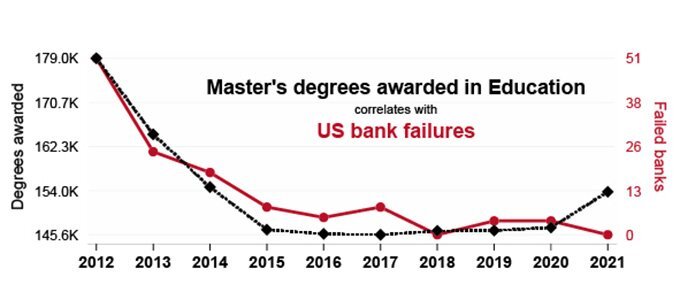
creative ways: Every day, the website ‘Spurious
Correlations’ publishes a correlation
between two randomly selected data sets (see graphic
above) and explains it using AI. For more than 10
years, ‘Unstatistik
des Monats’ (Unstatistic of the Month) has
been questioning published statistics in Germany and
their interpretation in the media. For several years
now, author and columnist Katja Berlin has been
creating ‘Torten
der Wahrheit’ (Pies of Truth), in which
she skilfully skewers current developments using
diagrams.
|
|
|
 |
News
from University of Jena
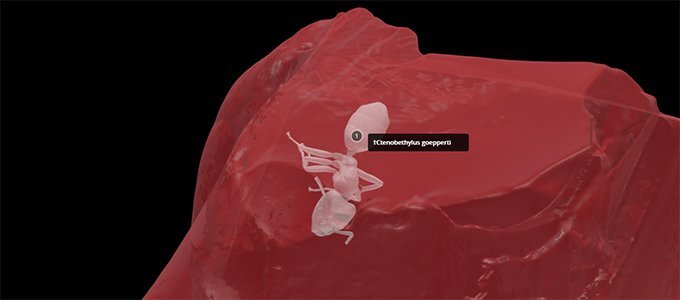
- A team of
researchers from the University of Jena has
examined Johann Wolfgang von Goethe's amber
collection using modern imaging techniques.
Enclosed in the amber, they found a fungus gnat, a
black fly and an ant. The now extinct ant was of
particular interest: thanks to its well-preserved
condition, the researchers were able to create a 3D
model. However, Goethe was probably unaware of
the existence of these animals, as they are not
visible to the naked eye.
- The University of
Jena has joined the European
network CoARA, which aims to develop new
criteria for research assessment: the focus
should be less on the quantity of output or the impact
factor of a journal but rather on the quality of the
research. In doing so, the University of Jena has
committed itself to developing an action plan within a
year. Researchers who wish to contribute to this
process are welcome to join the university working
group and contact Karoline Oelsner from the
Vice-Presidency for Research and Innovation (coara@uni-jena.de).
- Since this year,
the Family Office at the University of Jena has been
offering a free
babysitter-finding service. A babysitting
pool has been set up for this purpose. The babysitters
can look after children of all ages. Their tasks can
range from picking up children from childcare
facilities, playing with them, taking them to the
playground or looking after them in the evenings, to
helping older children with their homework. Payment
for the babysitters is handled by the family.
|
|
|
 |
Latest
news from Jena and Thuringia
- The Technical University of Chemnitz has revoked
the doctoral title of Thuringia's
Minister President Mario Voigt. In 2024, an
external plagiarism checker criticised several
passages in the dissertation. The university then
initiated an investigation and sought an expert
opinion. Now the faculty council has decided to revoke
the doctoral title. Voigt now wants to have this
reviewed legally. The far-right AfD party used the
revocation to put forward a vote of no confidence in
the Thuringian state parliament. The motion was
rejected and Voigt remains Minister President.
- The HackSpace Jena
is launching a series
of events to help people gain more control over
their digital communication and break free from their
dependence on commercial platforms. Events in this
series will take place on the first Sunday of every
month from 14 to 16.00h. The series is part of the
nationwide campaign ?Digital
Independence Day“ launched by author
Marc-Uwe Kling at the 39th Chaos Communication
Congress. (Illustration above: Logo of the Di.Day by
Florian Biege)
- The verdict in the case of Maja T. has
been announced: Maja, a non-binary person, has
been sentenced to eight years in prison in Hungary.
The Hungarian public prosecutor's office accuses Maja
of travelling from Jena to Hungary in early 2023 and
attacking right-wing extremists with a hammer. In
2024, Maja was arrested in Berlin and extradited to
Hungary in a cloak-and-dagger operation. Maja T. is
from Jena, which is why the arrest, extradition and
trial sparked major protests in Jena.
|
|